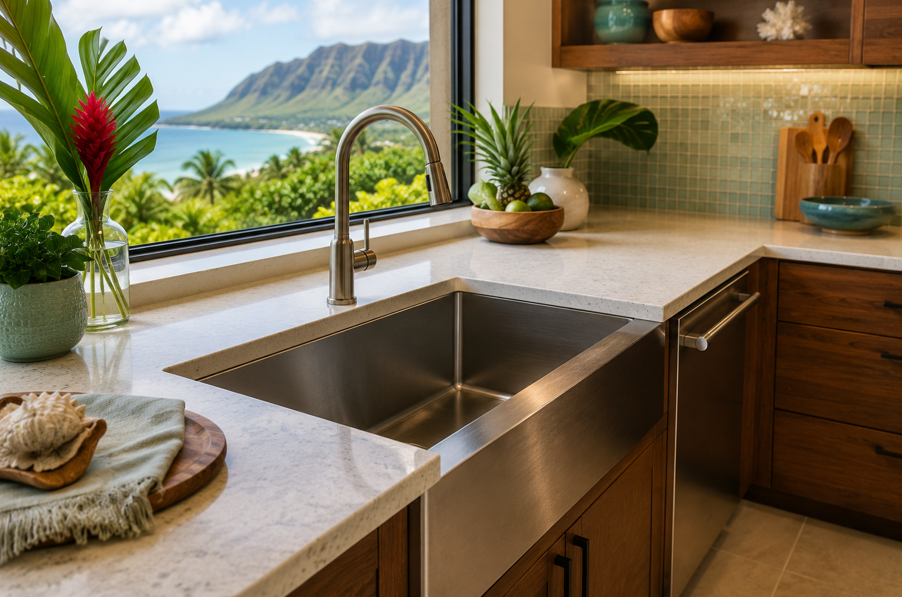
Choosing a sink may seem like a small part of a kitchen or bathroom renovation, but it can have a major impact on how the space looks, feels, and functions every day. In Lihue homes, where island living often means humidity, salt air, family gatherings, sandy feet, fresh food prep, and indoor-outdoor routines, the right sink needs to do more than look attractive. It needs to be durable, practical, easy to clean, and suited to the way your household actually uses the space.
A sink is one of the hardest-working fixtures in the home. In the kitchen, it handles meal prep, dishes, rinsing produce, cleaning seafood, filling pots, and everyday messes. In the bathroom, it supports morning routines, guest use, skincare, shaving, handwashing, and cleaning. Because sinks are used so often, the wrong size, style, or material can become frustrating quickly.
At Selective Stone, we help Hawaii homeowners, contractors, and designers choose materials that make sense for island homes. Whether you are renovating a kitchen in Lihue, updating a bathroom vanity, or selecting fixtures for a rental or commercial property, understanding your sink options can help you make a choice that balances beauty, value, and long-term performance.
Why Sink Selection Matters in Lihue Homes
Lihue’s climate and lifestyle create specific considerations for home materials. High humidity can make moisture control more important. Salt air can affect some metals and finishes over time. Busy kitchens and bathrooms need surfaces and fixtures that are easy to maintain. For homes that host family, guests, or visitors, function matters just as much as appearance.
A sink also affects the rest of the design. It needs to work with your countertop, cabinetry, faucet, plumbing, backsplash, and layout. A beautiful sink that is too shallow may splash too much. A large sink that does not fit the cabinet can create installation issues. A material that looks stylish online may not be the easiest to clean in a humid island environment.
For Lihue homeowners, sink selection should begin with real use. How often do you cook? Do you wash large pots and pans? Is the kitchen used by a large family? Is the bathroom a guest bath, primary suite, powder room, or rental unit? Do you prefer low-maintenance finishes? Are you pairing the sink with granite, quartz, marble, or another countertop surface?
The best sink is not always the most dramatic one. It is the one that fits the room, supports your routine, and holds up well in Hawaii’s conditions.
Start with the Room: Kitchen, Bathroom, or Utility Area
Before comparing sizes and materials, think about where the sink will be installed. Kitchen sinks, bathroom sinks, laundry sinks, and bar sinks all serve different purposes.
Kitchen sinks need the most durability and capacity. They often handle food prep, dishwashing, heavy cookware, and frequent cleaning. In Lihue homes where families cook often or entertain guests, a deeper kitchen sink can make daily tasks much easier.
Bathroom sinks usually place more emphasis on style, space efficiency, and easy cleaning. A primary bathroom may call for a larger vanity sink or double-sink layout, while a powder room may work better with a compact vessel or undermount sink. Guest bathrooms and rental bathrooms often benefit from simple, durable options that are easy to wipe down.
Laundry and utility sinks are all about function. These sinks may be used for rinsing cleaning tools, washing delicate items, soaking clothes, or handling messes that should not go into the kitchen or bathroom sink. Durability and depth are often more important than decorative detail.
For many homes, the sink should be selected at the same time as the countertop. The two need to work together in terms of size, cut-out, mounting style, support, and visual balance. Waiting until the end of the project to choose a sink can limit your options or create avoidable installation problems.
Choosing the Right Kitchen Sink Size
Kitchen sink size affects how easy the kitchen is to use every day. A small sink may look neat, but it can make washing large pots, pans, baking trays, and serving dishes more difficult. A very large sink may be practical, but only if the cabinet and counter layout can support it properly.
The most common kitchen sink widths often fall between 24 and 36 inches, but the right size depends on the base cabinet. As a general rule, the sink should be slightly smaller than the cabinet that supports it, leaving enough room for mounting hardware, plumbing, and structural support.
Depth is just as important as width. A deeper sink can hide dishes, reduce splashing, and make it easier to wash large cookware. However, very deep sinks may be less comfortable for shorter homeowners or people who prefer not to bend forward while washing dishes. In a busy family kitchen, a depth of around 8 to 10 inches is often a practical range, though the best choice depends on personal comfort.
For Lihue homeowners who cook frequently, a larger single-bowl sink can be especially useful. It provides open space for large items and makes cleaning easier. For households that prefer separating tasks, a double-bowl sink may still be appealing. The key is to choose based on how you actually use the kitchen rather than what looks familiar.
Also consider counter space. In smaller kitchens or condos, an oversized sink may take away valuable prep area. In larger open kitchens, a wider sink can feel proportional and practical.
Single-Bowl vs Double-Bowl Kitchen Sinks
One of the most common kitchen sink decisions is single-bowl versus double-bowl. Both can work well, but they support different habits.
A single-bowl sink offers one large, open basin. This makes it easier to wash large pans, cutting boards, roasting trays, and oversized dishes. It also gives the kitchen a clean, modern look. Many homeowners who use dishwashers regularly prefer single-bowl sinks because they do not need one side for washing and one side for rinsing.
A double-bowl sink divides the basin into two sections. This can be helpful for multitasking, such as soaking dishes on one side while rinsing produce on the other. Some homeowners like having a separation between clean and dirty items. Double-bowl sinks can also support traditional dishwashing routines.
However, double-bowl sinks may make it harder to fit larger cookware. If both bowls are small, the sink can feel cramped. A low-divider double sink can offer a compromise by allowing larger items to rest across both bowls while still giving some task separation.
For Lihue kitchens, the decision often comes down to cooking style. If you cook large meals, clean big pans, or prefer an open workspace, a single-bowl sink may be best. If you handwash dishes often and like separation, a double-bowl sink may feel more practical.
Bathroom Sink Sizes: Balance Comfort and Counter Space
Bathroom sinks require a different approach. In bathrooms, size should support comfort without overwhelming the vanity. A sink that is too large can reduce counter space for daily items. A sink that is too small can lead to splashing and make the vanity less useful.
For primary bathrooms, many homeowners prefer larger sinks or double vanities. Double sinks can be convenient for couples or shared spaces, especially during busy mornings. However, double sinks require enough vanity width, plumbing space, and counter area. In some bathrooms, one larger sink with generous counter space may be more useful than two smaller sinks.
Guest bathrooms and powder rooms often need compact solutions. A smaller undermount, drop-in, pedestal, or vessel sink can work well if the space is limited. The goal is to provide comfortable handwashing without making the room feel crowded.
Depth matters in bathrooms too. Shallow sinks can look elegant, but they may splash more easily. This is especially true with taller faucets or vessel sinks. When selecting a bathroom sink, always consider the faucet height, water flow, and basin shape together.
For Lihue homes that welcome family or visitors, easy cleaning is also important. Smooth basin shapes, simple edges, and practical materials can make daily maintenance easier in a humid bathroom environment.
Undermount, Drop-In, Vessel, and Farmhouse Styles
Sink style affects both appearance and maintenance. The most common options include undermount, drop-in, vessel, and farmhouse sinks.
Undermount sinks are installed beneath the countertop, creating a smooth transition from counter to basin. This style is popular because it looks clean and makes wiping crumbs or water directly into the sink easier. Undermount sinks pair beautifully with stone and solid surface countertops, but they require precise installation and proper support.
Drop-in sinks, also called top-mount sinks, are installed from above, with a visible rim resting on the countertop. They are often easier to install and can be cost-effective. The rim may require extra cleaning because debris and moisture can collect around the edge, but many homeowners still appreciate their practicality.
Vessel sinks sit on top of the counter and are often used in bathrooms as a design feature. They can create a stylish, spa-like look, especially in powder rooms or guest bathrooms. However, they require careful planning around faucet height, counter height, splash control, and cleaning around the base.
Farmhouse sinks, also known as apron-front sinks, have a deep basin and exposed front. They can be beautiful in kitchens, especially in warm, coastal, traditional, or transitional designs. However, they require compatible cabinetry and careful installation. They may not be the easiest retrofit option unless the cabinet is designed or modified for that style.
For many Lihue homeowners, undermount stainless steel kitchen sinks and practical bathroom vanity sinks offer the best balance of appearance, cleaning ease, and long-term use.
Stainless Steel Sinks for Island Durability
Stainless steel is one of the most popular sink materials, especially for kitchens. It is practical, durable, hygienic, and versatile enough to suit many design styles. In Hawaii homes, stainless steel can be a strong choice because it handles everyday moisture well when cared for properly.
Not all stainless steel sinks are the same. Gauge, finish, sound-dampening, basin shape, and steel quality all affect performance. A lower gauge number means thicker steel. Thicker stainless steel can feel more substantial and may reduce denting and noise. Many quality kitchen sinks include sound-dampening pads or coatings to reduce the hollow sound that can come from running water and dishes.
Stainless steel works well with many countertop materials, including granite, quartz, engineered stone, and solid surface. It also pairs nicely with modern appliances and fixtures. For Lihue kitchens where cooking, rinsing, and cleaning happen often, stainless steel is usually a smart and reliable option.
Salt air should still be considered. Stainless steel is corrosion-resistant, but it is not completely maintenance-free. Regular cleaning, rinsing away salty residue, drying the surface, and avoiding harsh chemicals can help keep the sink looking good. In coastal areas, these habits are especially important.
Homeowners exploring sinks should compare basin depth, corner radius, finish, and mounting style before choosing. Small design differences can make a sink easier to clean and more comfortable to use every day.
Other Sink Materials to Consider
While stainless steel is a leading choice, there are other sink materials worth considering depending on the room and design goal.
Porcelain or vitreous china sinks are common in bathrooms. They offer a smooth, classic appearance and are generally easy to clean. They work well in vanities, pedestal sinks, and traditional bathroom designs. However, they can chip if struck hard and may show marks over time.
Fireclay sinks are often used in farmhouse-style kitchens. They have a classic, substantial look and can be very attractive. However, they are heavy and require proper support. They may also be more expensive and need careful handling.
Composite granite sinks offer a stone-like appearance and good durability. They can work well for homeowners who want a darker or more textured look. However, they may require specific cleaning products and can show mineral deposits or residue if not maintained properly.
Cast iron sinks with enamel finishes are durable and traditional, but they are heavy and can chip if the enamel is damaged. Once chipped, the exposed material can become more vulnerable.
Natural stone sinks can be striking, especially in luxury bathrooms, but they often require more care. In Hawaii’s humid climate, porous materials should be selected carefully and maintained properly.
The best sink material depends on where the sink will be used, how much maintenance you want, and the overall design of the room.
Matching Your Sink with Countertops and Fixtures
A sink should not be chosen in isolation. It needs to work with the countertop, faucet, cabinet, backsplash, and overall design.
For granite or quartz countertops, undermount stainless steel sinks are a popular kitchen choice because they create a clean and practical work area. In bathrooms, undermount porcelain sinks often pair well with stone vanity tops. Vessel sinks can make a strong design statement, but they require more planning.
Faucet selection matters too. A large kitchen sink may pair well with a pull-down faucet for rinsing dishes and cleaning the basin. A compact bathroom sink may need a lower faucet to reduce splashing. Vessel sinks usually require taller faucets or wall-mounted fixtures.
Finish coordination is another consideration. Stainless steel, brushed nickel, chrome, matte black, and brass-style finishes can all work, but durability should be considered in island environments. Salt air and moisture can affect finishes over time, so quality and cleaning habits matter.
Cabinet size is essential. A sink that is too large for the cabinet can create structural and installation issues. Before choosing a sink, confirm cabinet dimensions, countertop material, plumbing location, and installation requirements.
In Lihue homes, where shipping and availability can affect renovation timelines, it helps to choose sinks and related materials early. Coordinating the sink with the countertop and faucet from the start can prevent delays and costly changes.
Practical Features That Make Daily Use Easier
Beyond size, style, and material, small features can make a sink much more useful.
Rounded corners are easier to clean than sharp corners. A sloped basin helps water drain properly. Rear-positioned drains can create more usable cabinet space underneath and make stacking dishes easier. Sound-dampening pads reduce noise in stainless steel sinks. Built-in accessories such as grids, strainers, cutting boards, and drying racks can add convenience.
For kitchens, sink grids are especially helpful. They protect the bottom of the sink from scratches and allow water to drain under dishes. For homeowners who wash large pans or heavy cookware, this can extend the life of the sink’s appearance.
For bathrooms, overflow drains may be important, depending on the sink style and local requirements. Easy-clean shapes and smooth surfaces can make a big difference in guest bathrooms and rental properties.
Think also about maintenance. A sink with tight corners, unusual shapes, or hard-to-reach edges may look interesting but require more cleaning. In busy island homes, simple and practical often wins.
Common Sink Selection Mistakes to Avoid
One common mistake is choosing a sink too late in the renovation. Because the sink affects countertop cut-outs, cabinet support, faucet placement, and plumbing, it should be part of the planning process early.
Another mistake is choosing based only on appearance. A sink can look beautiful in a photo but feel too shallow, too small, too noisy, or too difficult to clean in real life.
Ignoring cabinet size is also a problem. Not every sink fits every base cabinet. Large farmhouse sinks, deep single bowls, and wide double bowls all need enough cabinet space and support.
Homeowners sometimes forget about faucet compatibility. The faucet height, reach, handle placement, and spray function should match the sink. If the faucet is too high for a shallow bathroom sink, splashing can become a daily annoyance.
Another mistake is underestimating Hawaii’s climate. Moisture, humidity, salt air, and frequent cleaning all affect sink performance and finish over time. Durable materials and simple care routines are especially important in Lihue and other coastal communities.
Finally, do not forget the countertop. Sink and counter should work together visually and structurally. A heavy sink, undermount installation, or special cut-out requires proper planning.
Final Thoughts: Choose a Sink That Fits Island Life
The right sink can make a kitchen or bathroom more beautiful, practical, and enjoyable to use. For Lihue homeowners, the best choice is one that fits the room, supports daily routines, and performs well in Hawaii’s humid, salt-air climate.
Start with the basics: where the sink will go, how it will be used, what size the cabinet allows, and what material will be easiest to maintain. From there, compare styles such as undermount, drop-in, vessel, and farmhouse sinks. Consider stainless steel for kitchen durability, porcelain for classic bathroom use, and other materials when the design calls for something more distinctive.
A sink is not just a fixture. It is part of how the home works every day. When chosen thoughtfully, it can support cooking, cleaning, hosting, relaxing, and the casual rhythm of island living.
If you are planning a kitchen or bathroom renovation in Lihue and want help comparing sink styles, materials, countertops, and fixtures, visit showroom to explore options that suit your home, budget, and Hawaii lifestyle.