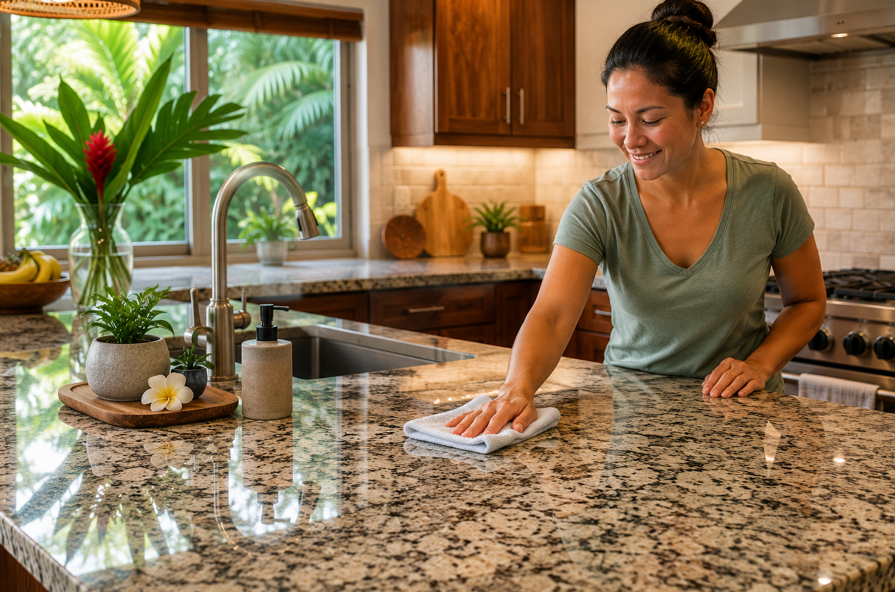
Granite countertops have long been a favourite choice for Hawaii homeowners, and for good reason. They are naturally beautiful, durable, heat-resistant, and able to bring a rich, grounded look to kitchens, bathrooms, laundry rooms, and even commercial spaces. In Mililani homes, granite can feel especially fitting because it balances everyday practicality with the warm, natural style many island homeowners love.
That said, granite still needs the right care, especially in Hawaii’s humid climate. Moisture, salt air, daily cooking, strong sunlight, and busy family routines can all affect how a countertop looks and performs over time. Granite is strong, but it is not completely maintenance-free. With the right habits, it can stay beautiful and reliable for many years.
At Selective Stone, we help Hawaii homeowners and contractors choose materials that suit real island living. Granite is one of those materials that can perform very well here when it is properly selected, sealed, cleaned, and maintained. Whether you are planning a new kitchen in Mililani or already have granite countertops in your home, understanding how to care for the stone can protect your investment and keep your space looking polished.
Why Granite Works Well for Mililani Homes
Granite is a natural stone formed under intense heat and pressure, which gives it impressive strength and unique visual character. Every piece has its own pattern, mineral variation, and colour movement. Some slabs have dramatic veining, while others offer softer speckles or a more consistent pattern. This variety makes granite appealing for homeowners who want a countertop that feels natural rather than manufactured.
For Mililani homes, granite can work beautifully in both modern and traditional designs. It pairs well with white cabinets, warm wood finishes, stainless steel sinks, tile backsplashes, and luxury vinyl or tile flooring. It can also complement Hawaii’s island aesthetic by bringing natural texture and earthy depth into the home.
Granite is also practical. It stands up well to everyday use, which makes it a strong option for kitchens where families cook often, gather after work or school, and prepare meals for guests. When sealed correctly, granite resists many common stains and moisture concerns. It can also handle heat better than many other countertop materials, although using trivets and hot pads is still a smart habit.
Mililani’s climate is another reason granite is worth considering. The area has warm temperatures and regular humidity, and many homes deal with moisture in the air throughout the year. Granite’s durability makes it a good fit, but proper care matters because natural stone can still absorb liquids if left unsealed or poorly maintained.
The key is not to treat granite as delicate. Instead, treat it as a strong natural material that benefits from consistent, simple care.
Understanding Hawaii’s Humidity and Natural Stone
Humidity is part of everyday life in Hawaii. For homeowners, that means materials inside the home are exposed to moisture in the air even when they are not directly wet. Kitchens and bathrooms are especially affected because cooking, washing dishes, showering, and cleaning all add more moisture to the space.
Granite is less porous than many natural stones, but it can still absorb moisture and oils through tiny pores in the surface. If the stone is not properly sealed, spills may soak in and leave dark marks or stains. In humid conditions, it is also important to avoid letting water sit around sinks, seams, edges, and backsplashes for long periods.
Salt air is another island consideration, especially for homes closer to the coast. While salt air is often discussed in relation to metal fixtures and appliances, it also contributes to the overall moisture load in the home. Good ventilation, careful cleaning, and proper sealing all help protect surfaces in this environment.
Strong UV exposure can also play a role in some homes. If a countertop receives direct sunlight for long periods through a window, certain sealers or nearby finishes may age faster. Granite itself is generally stable, but it is still wise to think about sunlight, window placement, and long-term exposure when designing a kitchen or bathroom.
For Mililani homeowners, the good news is that granite can perform very well in this climate. The goal is to build care habits that respond to Hawaii’s conditions instead of following generic mainland advice that does not always consider humidity, island shipping costs, or local material availability.
Start with the Right Sealer
Sealing is one of the most important parts of granite countertop care. A sealer helps reduce the stone’s ability to absorb liquids, oils, and moisture. It does not create an invisible shield that makes granite impossible to stain, but it gives homeowners more time to wipe up spills before they settle into the stone.
How often granite needs sealing depends on the type of granite, the finish, how heavily the surface is used, and the quality of the sealer. Some granite colours and patterns are denser than others. Darker stones may absorb less, while lighter stones may need more attention. A busy kitchen may also need more frequent sealing than a guest bathroom vanity.
A simple water test can help you understand whether your granite may need resealing. Place a few drops of water on a clean section of the countertop and leave them for several minutes. If the water beads on the surface, the sealer is likely still doing its job. If the water darkens the stone or absorbs quickly, it may be time to reseal.
In Hawaii’s humid climate, it is worth checking your granite regularly rather than waiting until stains appear. Areas around sinks, cooktops, coffee stations, and food prep zones often need the most attention because they see more water, oil, and daily use.
When resealing, always use a product designed for natural stone and follow the instructions carefully. The surface should be clean and dry before application. Applying sealer over dirt, grease, or moisture can lead to poor results. If you are unsure which sealer is right for your specific granite, it is worth asking a stone professional for guidance.
Clean Granite with Gentle Daily Habits
Daily cleaning does not need to be complicated. In fact, granite usually performs best with simple, gentle care. A soft cloth, warm water, and a pH-neutral cleaner designed for stone are often enough for everyday wiping.
Avoid harsh cleaners, bleach, ammonia, vinegar, lemon-based sprays, abrasive powders, and rough scrubbing pads. These products can dull the finish, weaken the sealer, or leave the surface looking uneven over time. Vinegar is a common household cleaner, but it is not a good choice for natural stone because its acidity can affect the surface and sealer.
For busy Mililani kitchens, it helps to wipe countertops after cooking rather than leaving spills overnight. Cooking oils, sauces, coffee, juice, wine, and marinades can all create stains if left sitting, especially on lighter granite. Even water should be wiped away around the sink, faucet, and seams.
For dried-on food, use a damp cloth to soften the residue before wiping. Avoid scraping with metal tools or sharp objects. A plastic scraper may be used carefully if needed, but gentle cleaning is always better than force.
Microfibre cloths are useful because they clean without scratching and help remove streaks. After cleaning, drying the surface with a soft cloth can help prevent water spots, especially in humid areas where moisture lingers.
The best routine is simple: wipe spills promptly, clean with stone-safe products, and dry the surface afterwards. These small habits make a big difference over time.
Protect High-Use Areas in the Kitchen
Granite is durable, but high-use zones still benefit from extra protection. In most kitchens, the areas around the sink, stove, coffee machine, cutting board, and main prep space see the most wear. Paying attention to these zones helps prevent avoidable damage.
Use cutting boards instead of cutting directly on granite. The stone is hard, but knives can leave marks on some finishes and become dull quickly against the surface. Cutting boards also help contain juices from fruits, meats, and acidic ingredients.
Use trivets or hot pads under hot pots, pans, slow cookers, and small appliances. Granite can handle heat better than many materials, but sudden temperature changes or repeated heat exposure can still be risky. It is better to protect the surface than assume it can handle everything.
Under coffee makers, soap dispensers, cooking oils, and bathroom products, trays can help prevent rings or residue build-up. This is especially helpful in humid homes where moisture can gather under bottles and appliances.
Around sinks, keep the area as dry as possible. Water splashes are normal, but standing water near seams, faucet holes, and edges can create problems over time. Wiping this area at the end of the day is a small habit that helps maintain both the stone and nearby cabinetry.
If you have children or frequent guests, it may also help to keep coasters and small trays visible. Granite is strong enough for real life, but clear habits make care easier for everyone in the household.
Be Careful with Stains and Spills
Spills happen. The most important thing is how quickly they are handled. Granite is more forgiving than some natural stones, but oils, coloured liquids, and acidic products can still cause issues if left on the surface too long.
Common kitchen spills to watch include coffee, tea, red wine, fruit juice, tomato sauce, soy sauce, cooking oil, turmeric, curry, and marinades. In Hawaii homes, fresh fruits, sauces, and island-style cooking can involve colourful or acidic ingredients, so prompt cleaning is helpful.
Blot spills rather than spreading them. Use a soft cloth or paper towel to lift the liquid from the surface, then clean the area with a stone-safe cleaner. Rubbing aggressively can spread the spill or push it into the stone.
Oil-based stains may darken the granite, while water-based stains may leave discolouration. If a stain appears, avoid using random household cleaners to remove it. The wrong product can make the issue worse. Natural stone stain removal often depends on the type of stain, so it is better to get guidance before experimenting.
Bathroom granite also needs care. Toothpaste, cosmetics, hair dye, perfume, soap, and skincare products can leave residue or marks. Keeping bottles on trays and wiping the vanity regularly can prevent build-up.
With good sealing and quick cleaning, most daily spills are manageable. Granite’s strength is one reason it remains such a reliable choice for Hawaii kitchens and bathrooms.
Choose the Right Finish for Your Lifestyle
Granite countertops come in different finishes, and the finish affects both the look and maintenance. A polished finish is glossy and reflective, making colours appear richer and more dramatic. It is also generally easier to wipe clean, which makes it popular for kitchens.
A honed finish has a softer, matte appearance. It can feel more understated and natural, which many homeowners love. However, honed granite may show fingerprints, oils, or water marks more easily depending on the colour and use. It may also require more attention to sealing.
Textured finishes can add character, but they may be less practical for heavy-use kitchen areas because small surface variations can hold crumbs or residue. These finishes may work better in selected design applications rather than every kitchen.
For Mililani homeowners, the right finish depends on how the surface will be used. A family kitchen may benefit from polished granite because it is easy to clean and visually bright. A bathroom vanity or design-focused area may allow more flexibility.
Colour matters too. Lighter granite can brighten a room but may show stains or marks more easily if not sealed well. Darker granite can hide some everyday marks but may show dust, fingerprints, or water spots depending on the finish.
This is why viewing stone in person is so important. Photos can help with inspiration, but they do not always show texture, shine, mineral movement, or how the material reacts to light. Seeing options in a showroom makes it easier to choose confidently.
When to Reseal or Call a Professional
Granite care is usually simple, but there are times when professional help is the better choice. If your countertop is absorbing water quickly, showing persistent stains, losing its shine, or developing rough patches, it may need attention beyond daily cleaning.
Resealing may be enough in many cases. A fresh sealer can help protect the surface and restore confidence in daily use. However, if the countertop has etching, deep stains, chips, cracks, or seam issues, a professional assessment is worthwhile.
You may also want expert guidance if you are unsure what type of granite you have. Different stones can respond differently to cleaners, sealers, and maintenance products. Using the wrong product may create more work later.
For new installations, ask about sealing recommendations from the beginning. Knowing how your granite should be cared for helps you avoid confusion after the project is complete. Contractors, designers, and homeowners can all benefit from clear care instructions.
Selective Stone offers a wide range of countertops, including granite, quartz, marble, engineered stone, and pre-fabricated options. Comparing these materials with expert support can help you choose the right surface for your room, climate, budget, and maintenance preferences.
Granite Care for Bathrooms and Laundry Rooms
Granite is often thought of as a kitchen material, but it can also be a strong choice for bathrooms and laundry spaces. In these rooms, moisture is usually the biggest concern.
Bathroom vanities should be wiped regularly, especially around sinks. Standing water, soap residue, toothpaste, cosmetics, and hair products can all affect the surface if left in place. A tray under daily products can keep the countertop cleaner and reduce direct contact with bottles and spills.
In laundry rooms, detergents, stain removers, bleach products, and cleaning chemicals require extra caution. Some of these products can damage sealers or affect the stone. If granite is used in a laundry area, keep strong chemicals in a cabinet or on protective trays rather than directly on the countertop.
Ventilation is also important. Bathrooms and laundry rooms can hold moisture, especially in humid weather. Exhaust fans, open windows when practical, and regular airflow help protect stone, cabinetry, walls, and fixtures.
For Mililani homeowners, granite can be a durable choice beyond the kitchen, but the same principles apply: seal it, clean it gently, dry it regularly, and avoid harsh chemicals.
Long-Term Habits That Keep Granite Beautiful
The best granite care routine is not about doing one big maintenance task once a year. It is about small habits that protect the stone every day.
Wipe spills when they happen. Use cutting boards and trivets. Clean with stone-safe products. Dry wet areas around sinks. Avoid harsh chemicals. Check the sealer regularly. Use trays under bottles, oils, and appliances. Keep moisture-prone areas ventilated.
These habits are easy to build and do not take much time. They also help granite age gracefully. Natural stone is not meant to look like plastic. It has depth, variation, and character. With proper care, those qualities become part of the home’s long-term beauty.
Granite can also support home value because it is widely recognised as a durable and attractive countertop material. For homeowners planning to stay long-term, it offers everyday function. For those thinking about resale, it can make kitchens and bathrooms feel more finished and desirable.
In Hawaii, material choices are often shaped by more than appearance. Durability, humidity resistance, availability, shipping costs, and long-term value all matter. Granite performs well because it offers a strong balance of natural beauty and practical resilience.
Final Thoughts: Granite Care Made Simple for Mililani Homes
Granite countertops are a beautiful and reliable choice for Mililani homeowners who want natural stone with lasting appeal. They can handle daily kitchen routines, bathroom moisture, family gatherings, and the warm style of island living. But like any quality material, granite performs best when cared for properly.
In Hawaii’s humid climate, sealing, gentle cleaning, ventilation, and quick spill response are especially important. Salt air, moisture, and everyday use can all affect surfaces over time, but granite remains a strong option when homeowners follow the right care habits.
The goal is not to make countertop care feel overwhelming. It is to protect a beautiful surface with practical steps that fit real life. A few simple habits can help your granite stay polished, clean, and ready for years of island living.
If you are planning a countertop project, comparing granite with quartz or engineered stone, or looking for expert guidance on materials that suit Hawaii homes, contact the Selective Stone team to explore durable options for your Mililani renovation.